
Why This Matters for a Medium-Volatility Slot
The Big Dog House sits at Medium volatility with a hit frequency of roughly 1 in 3.75 spins — steady enough to feel engaging over long sessions, which is exactly why setting limits matters before you start rather than after a losing streak. In Canada, the legal age to gamble is 19 in most provinces, but only 18 in Alberta, Manitoba, and Quebec. Regulators like AGCO in Ontario, GPEB in British Columbia, and Loto-Quebec oversee licensed operators and each publish tools for deposit limits, self-exclusion, and time-outs. None of these bodies certify a specific RTP or payout table for this title — that information comes from the studio and independent slot databases — but they do certify that a Canadian-facing operator meets baseline player-protection standards.
How to Set Up Guardrails Before Your First Spin
Start by confirming the age rule for your province. If you're in Alberta, Manitoba, or Quebec, the minimum is 18; everywhere else in Canada it's 19. This isn't a formality — licensed sites verify identity documents, and an account opened under the wrong age gets frozen, not refunded.
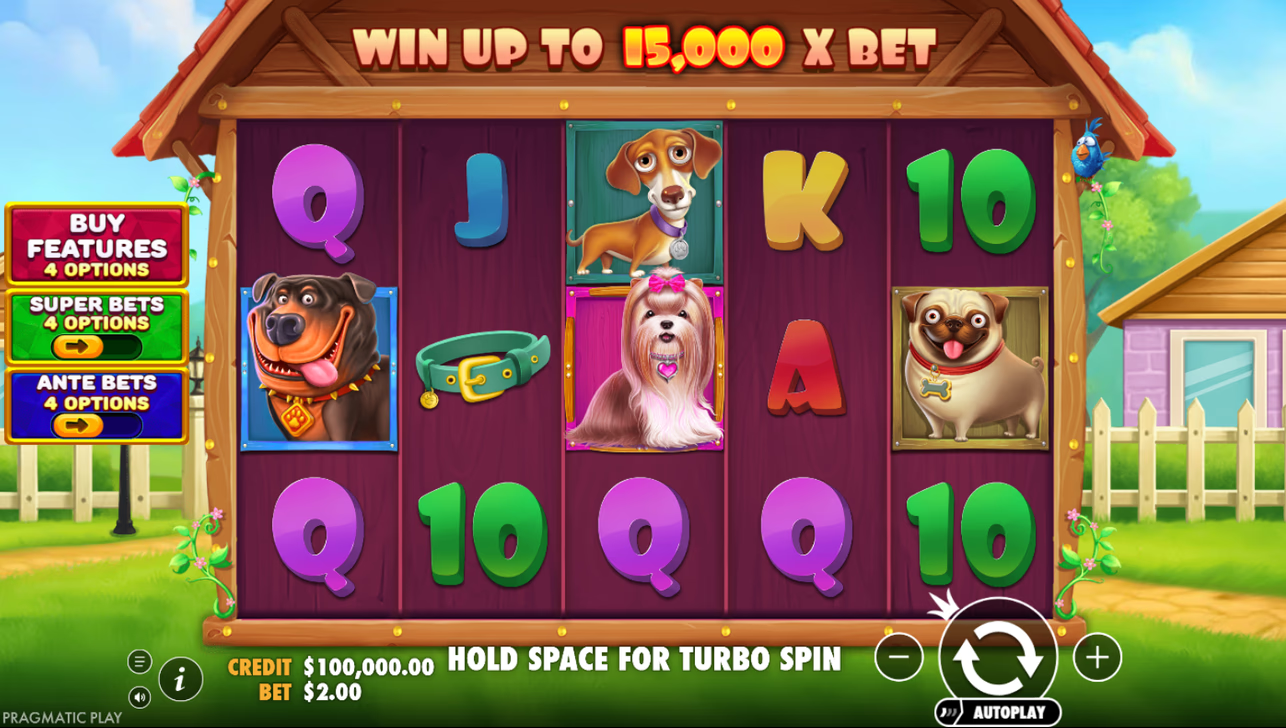
Next, decide on a session budget before you open the game, not while the reels are spinning. The Big Dog House pays fixed wins across 20 paylines with a stated cap of 15,000x stake, but a headline multiplier says nothing about how a single session will go. Medium volatility means streaks in both directions are normal, so a number you're comfortable losing — not chasing back — is the only number that matters going in.
Most Canadian-licensed operators built on AGCO, GPEB, or Loto-Quebec frameworks let you set a deposit limit, a loss limit, or a time-based reminder directly in your account settings. Set at least one of these before your first real-money spin on this title, even if you plan a short session. It takes two minutes and removes the need to trust your own judgement mid-game.
If you want to see how the mechanics feel first — the expanding and colossal wilds, the sticky wilds in free spins, the ghost wild that can strip them away — Pragmatic Play's demo mode and most affiliate casino pages offer a free-play version with no account or deposit required. Play that first. It shows you the pacing of the bonus round and the base game's rhythm without any financial exposure.
Finally, know where to go if a session stops feeling like entertainment. AGCO-regulated Ontario operators link to ConnexOntario; GPEB-licensed BC sites point to the BC Responsible Gambling program; Loto-Quebec operators direct players to its own support line. Bookmark whichever applies to your province before you need it, not after.
Reading the Game's Own Numbers With a Clear Head
Part of playing responsibly is understanding what the numbers on a slot page actually promise — and what they don't. The Big Dog House ships with three published RTP configurations: 96.53%, 95.45%, and 94.48%. An operator can select which one runs on their site, and unless the casino's game info panel names the exact figure, you're playing on an unknown setting somewhere in that range. That's a math detail, not a red flag, but it's worth checking before a long session, because the gap between the highest and lowest configuration adds up over hundreds of spins.
The bonus buy menu is another spot where a clear head helps. This title offers several purchase options tied to different free spins modes, letting you skip straight to the paw-scatter feature and its sticky wilds instead of spinning them in naturally. Buying a bonus round spends your budget in one lump sum rather than spreading it across base-game spins — useful to know if you're managing a strict session limit, since it changes how fast that limit gets used up.
The max win of 15,000x stake is a ceiling, not an expectation. It requires a specific combination of colossal wilds, sticky multipliers, and a long free spins run avoiding the ghost wild's removal effect — a low-probability outcome by design. Treating any stated maximum as a target rather than a rare best case is one of the more common ways a session budget gets abandoned partway through.
If any of this — chasing a specific configuration, buying bonus rounds to recover a loss, or extending sessions past a set limit — starts to feel familiar, that's the moment to use the tools already built into your account rather than push through. AGCO, GPEB, and Loto-Quebec all treat self-exclusion and deposit caps as standard features, not last resorts, and using them early is far easier than using them late.